
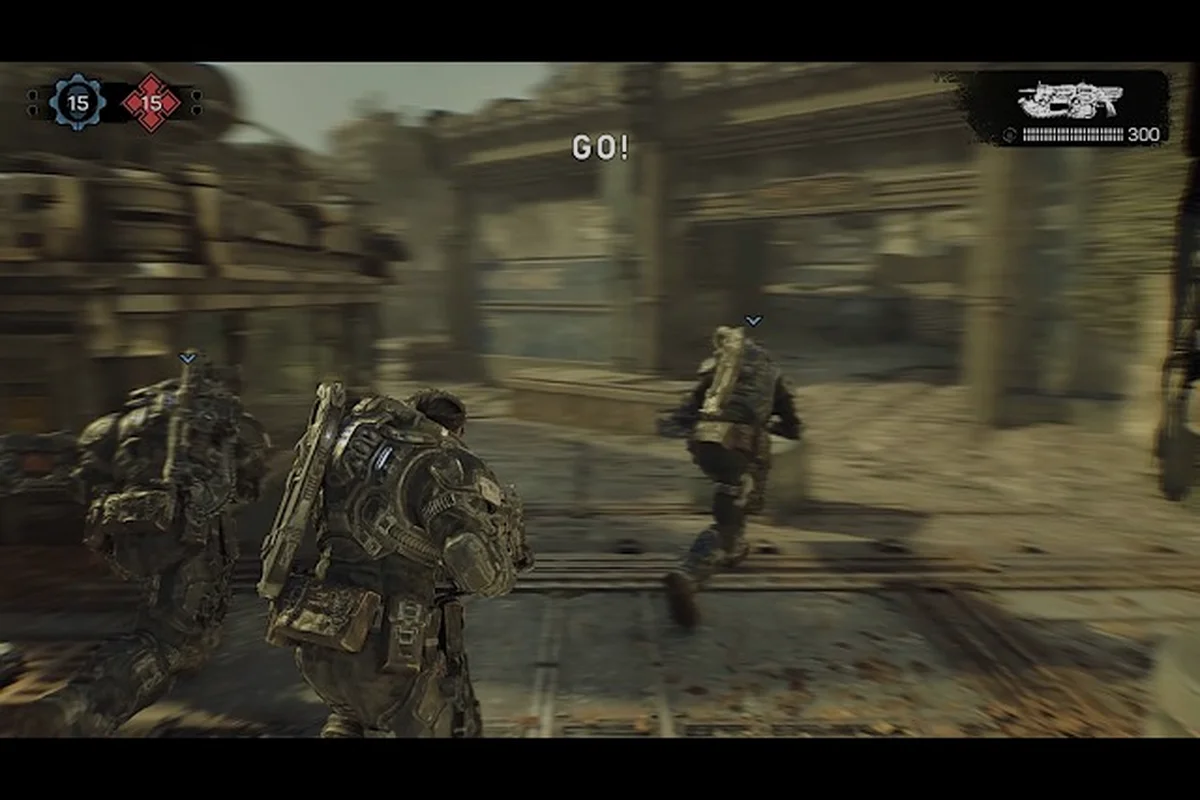
Emergence Day is chaos, and the difference between a squad that survives Kalona and one that gets overrun often comes down to how well you communicate. The gears of war e-day ping system guide below breaks down every ping type, how to use them effectively in Horde Siege, and why non-verbal callouts matter just as much as voice chat. Whether you are playing with friends or matchmade randoms, mastering pings transforms your squad coordination and directly improves your survival odds.
The rebuilt movement system and new enemy AI in E-Day punish players who wander off alone, which makes the ping system your most reliable tool for keeping everyone on the same page. This guide covers the full ping interface, advanced marking techniques, and how to adapt your callouts for solo play with AI teammates. You will also learn how to combine pings with the class-based Tactical Gear system to maximize your squad's efficiency.
Ping System Fundamentals and Core Callouts
The ping system in Gears of War: E-Day is built around a single button press that opens a contextual radial menu, letting you mark enemies, locations, objectives, and loot without ever opening the full communication wheel. According to the official Gears of War website, the game's "Never Fight Alone" co-op design theme means every mechanic, including pings, is tuned for squad coordination across the three-day campaign and the 12-player Horde Siege mode.
Standard Ping is your bread-and-butter tool. A quick tap marks whatever is in your crosshair—an enemy, a weapon pickup, or a piece of cover—and displays a floating icon visible to your entire squad for about five seconds. This is the fastest way to flag a Brumak spawning behind your team or point out a Longshot on a rooftop without typing a single word.
Enemy Pings are contextual and automatically categorize what you mark. Grunts, Wretches, and Boomers each get distinct icons, so your squad instantly knows whether they are pushing into a light skirmish or a heavy encounter. The system even distinguishes between standard and elite variants, which matters when you spot a Berserker charging through a doorway and need your team to focus fire immediately.
Location Pings work differently because they mark a spot on the ground or a piece of cover rather than a target. These are invaluable for directing teammates to defensive positions during Horde Siege objectives, especially when you need someone to hold a specific angle while the rest of the squad repairs the R.I.G. scanning device. You can also ping the ground to suggest a flanking route or warn about an active emergence hole.
Objective Pings appear automatically when you interact with mission-critical objects, but you can also manually ping objectives to draw attention. In the campaign, this helps when you are playing solo with AI teammates and need them to focus on a specific door or terminal. The AI responds to objective pings by repositioning, which makes the gears of war e-day solo tips in this guide much easier to execute.
Weapon and Loot Pings let you mark gear on the ground, which is particularly useful when you find a Gutpuncher or Incinerator but already have a full loadout. Your teammate can see exactly what you found and decide whether to grab it. This prevents the classic problem of someone walking past a power weapon because they did not notice it in the heat of combat.
| Ping Type | Button Input | Primary Use | Duration |
|---|---|---|---|
| Standard Ping | Quick tap | Mark any target or object | 5 seconds |
| Enemy Ping | Tap on enemy | Categorize threat type | 5 seconds |
| Location Ping | Hold + release | Mark ground or cover position | 8 seconds |
| Objective Ping | Tap on objective | Draw squad attention | 10 seconds |
| Weapon/Loot Ping | Tap on pickup | Share gear information | 5 seconds |
Advanced Marking Techniques for Squad Coordination
Once you master the basics, advanced marking techniques separate good squads from great ones. The ping system has a danger ping that activates when you hold the ping button on an enemy, which displays a larger, more urgent icon that pulses red. Use this sparingly for high-priority threats like a Corpser or an elite Theron Guard, because overusing it desensitizes your team to the warning.
Ping Chains are a technique where multiple squad members ping the same target in sequence, creating a visual trail that shows the enemy's movement path. This is especially effective against fast enemies like Wretches that weave through cover, because the chain of pings helps your Marksman track the target and line up a clean shot. Community reports from the August beta suggest that coordinated ping chains were one of the most effective strategies for dealing with swarm rushes on higher difficulties.
Pre-fire Pings involve marking a location before you engage, which gives your squad time to prepare. Before you breach a room in the campaign, ping the far corner where you expect enemies to funnel in, then ping the cover you want your Breacher to push toward. This turns a chaotic firefight into a rehearsed execution, and it is one of the most valuable gears of war e-day co-op tips you will find anywhere.
Ping Cancellation is a subtle mechanic that many players miss. If you accidentally ping the wrong target, you can cancel it by pinging the same spot again within two seconds. This prevents confusion when you meant to flag a Boomshot pickup but instead marked a wall, and it keeps your squad's visual field clean during intense fights.
Distance-Based Priority matters more than most players realize. The ping system automatically sorts multiple active pings by distance, so the closest ping to your character displays more prominently. This means you should ping threats that are close to your position rather than far away ones, because your squad will naturally focus on the nearest danger first.
Ping Wheel Customization
The ping wheel can be customized in the settings menu, letting you remap specific ping types to different directions on the radial menu. Competitive players often move the danger ping to the top position so they can access it faster during clutch moments, while Horde Siege players prefer having the objective ping on the right side for quick access during R.I.G. calibration phases.
Contextual Sensitivity is a setting that adjusts how aggressively the game interprets your ping intent. At higher sensitivity, a quick tap on the edge of an enemy's hitbox registers as an enemy ping, while lower sensitivity requires more precise aim. Experiment with this setting to find the balance between speed and accuracy, because misfired pings waste precious seconds in combat.
Ping Volume and Opacity sliders let you control how prominent ping icons appear on your screen. Some players prefer large, bright icons that are impossible to miss, while others want subtle markers that do not obstruct their view of the battlefield. The right balance depends on your playstyle, but most competitive players recommend keeping enemy pings at maximum opacity while reducing location ping opacity to avoid visual clutter.
Audio Ping Cues
Every ping type has a distinct audio cue that plays when you or a teammate activates it. Enemy pings use a sharp, high-pitched tone, location pings use a softer two-tone chime, and danger pings have a deep, urgent buzz. Learning these audio cues lets you process callouts without looking at the screen, which is crucial when you are focused on a firefight.
The audio cues also have directional audio, meaning you can tell where a ping originated based on which speaker the sound comes through. This is incredibly useful for locating threats that are outside your field of view, because a teammate pinging an enemy behind you creates a sound that clearly indicates the direction. Pair this with a good headset, and you effectively gain 360-degree awareness without ever turning around.
Horde Siege Communication Strategies
Horde Siege is where the ping system truly shines, because the 12-player format with three squads of four demands constant coordination across interconnected Kalona districts. The mode's structure, as detailed in the official multiplayer deep dive, revolves around R.I.G. scanning devices that drive mission objectives, and effective pinging keeps all three squads aligned on priorities.
Squad-Specific Pings are color-coded by squad, so you can instantly tell whether a ping came from your squad or a different one. This matters during extraction phases when multiple squads converge on the landing zone, because you need to know which team is covering which approach. The color coding also helps squad leaders delegate tasks, since you can ping an objective and your squad sees it in your color while other squads see it in a neutral tone.
Cross-Squad Coordination requires a different ping etiquette than within-squad communication. When you ping an enemy that threatens another squad's position, use the danger ping to signal urgency, but avoid spamming standard pings on targets that are not your responsibility. Community feedback from the beta suggests that squads who respected each other's space and only pinged shared threats had significantly higher extraction rates.
Objective Phase Pinging follows a specific rhythm that experienced teams develop over time. During the R.I.G. calibration phase, one player from each squad pings the three calibration points in sequence, creating a clear visual roadmap for the team. During the defense phase, the squad leader pings priority targets while individual players ping incoming threats from their assigned angles.
Energy and Supply Pings are essential for managing the mode's economy. When you find an energy cache or a supply drop, ping it immediately so your team knows where to collect resources. This is especially important during the extraction phase when you need to gather energy for the final push, and it prevents players from wandering around looking for caches that their teammates already collected.
| Phase | Primary Ping Focus | Secondary Ping Focus | Communication Goal |
|---|---|---|---|
| Calibration | R.I.G. points | Enemy positions | Establish route |
| Defense | Incoming threats | Repair locations | Maintain position |
| Extraction | Landing zone | Escape route | Coordinate retreat |
| Blitz | Priority targets | Power weapons | Maximize damage |
Solo Play and AI Teammate Ping Integration
Playing solo in E-Day does not mean you lose access to the ping system's benefits, because the AI teammates in the campaign respond to your pings in meaningful ways. According to the Steam store page, the game supports single-player alongside online co-op, and the AI squadmates are programmed to react to your callouts.
AI Response Behavior varies by ping type. When you ping an enemy, your AI teammates prioritize that target and adjust their firing patterns. When you ping a location, they move toward it and take up defensive positions. When you ping an objective, they focus their attention on completing that objective rather than engaging in random firefights.
Directive Pings are a special type of location ping that works exclusively with AI teammates. If you hold the ping button on a specific piece of cover, your AI squadmate moves to that position and holds it until you ping somewhere else. This lets you set up defensive formations without relying on voice commands, which is invaluable for the gears of war e-day solo tips in this guide.
Aggression Tuning is an AI setting that adjusts how aggressively your squadmates respond to pings. At higher aggression, they push toward pinged enemies and engage at close range, while at lower aggression, they hold position and engage from distance. Experiment with this setting based on your playstyle, because some players prefer AI that pushes forward while others want them to stay back and provide covering fire.
Ping-Based Tactical Commands go beyond simple target marking. If you ping an enemy and then ping a location behind that enemy, your AI teammates interpret this as a flanking order and reposition accordingly. This advanced technique takes practice to execute quickly, but it effectively gives you command-level control over your squad's positioning.
Solo Horde Siege is not available in the traditional sense, since the mode requires 12 players, but the ping system still helps you coordinate with your squad in matchmade games. Even without voice chat, consistent pinging communicates your intentions clearly enough to work effectively with strangers, which is why the gears of war e-day ping system guide emphasizes non-verbal communication as a core survival skill.
AI Teammate Limitations
AI teammates have limitations that you need to account for when relying on pings. They do not respond to danger pings with the same urgency as human players, and they sometimes ignore location pings during intense combat. This means you need to be more explicit with your pings when playing solo, and you should not expect AI squadmates to execute complex flanking maneuvers reliably.
Ping Frequency matters more with AI teammates than with human players. AI processes pings individually, so pinging the same target multiple times reinforces the command and increases the chance that they respond correctly. However, avoid spamming pings excessively, because the AI can get stuck in a loop trying to process conflicting commands.
Positioning Pings are the most reliable way to control AI teammates, since they respond more consistently to location pings than enemy pings. When you need an AI squadmate to hold a specific angle or move to a defensive position, ping the exact spot you want them to occupy rather than pinging the enemy they should engage.
Ping Etiquette and Common Mistakes
Effective pinging is as much about what you do not do as what you do, and understanding ping etiquette prevents the communication breakdowns that sink squads. The most common mistake players make is over-pinging, which floods the screen with icons and makes it impossible to distinguish important callouts from noise.
Ping Discipline means reserving your pings for information that matters. Do not ping every enemy you see, because your squad is already aware of visible threats. Instead, ping enemies that are outside your squad's field of view, enemies that are about to flank, or enemies that require immediate focus fire. This keeps your pings meaningful and ensures your squad pays attention when you do mark something.
Priority Overload happens when multiple squad members ping different targets simultaneously, creating a confusing mess of icons. Establish a simple rule: the squad leader calls primary targets, and individual players only ping threats that directly endanger them. This prevents conflicting callouts and keeps the squad focused on a single objective at a time.
Ping Timing is another factor that separates good players from great ones. Ping enemies as soon as you spot them, not after they have already engaged your squad. Early pings give your team time to react and reposition, while late pings are often too late to prevent damage. This is especially important for the gears of war e-day survival tips in this guide, because reacting faster than the enemy is the core of survival.
Silent Communication is the ultimate goal of ping mastery. A squad that communicates entirely through pings can execute complex strategies without saying a word, which is valuable in situations where voice chat is unavailable or when you are playing with players who speak different languages. The ping system in E-Day is robust enough to serve as a complete communication tool, and squads that master it gain a significant advantage.
| Mistake | Impact | Solution |
|---|---|---|
| Over-pinging | Visual clutter | Ping only key threats |
| Late pings | No reaction time | Ping on first sight |
| Conflicting pings | Squad confusion | Leader calls priority |
| Spam pinging | Desensitized team | Reserve danger pings |
| Ignoring pings | Missed callouts | Always check pings |
Integrating Pings with Class Roles and Loadouts
The ping system becomes even more powerful when you integrate it with the class system in Horde Siege. Each of the four classes—Assault, Breacher, Marksman, and Medic—uses pings differently based on their role in the squad, and understanding these synergies elevates your team's coordination.
Assault Players should focus on pinging priority targets that need aggressive pressure. When you spot a Boomer that needs to be rushed before it can set up its weapon, ping it with the danger ping and push forward. Your squad knows to follow your lead, and the Marksman can provide covering fire while you close the distance.
Breacher Players use location pings more than any other class, because their role involves pushing into enemy positions and creating space for the squad. Ping the cover you plan to advance toward, then ping the enemy you want suppressed while you move. This gives your squad clear information about your intentions and lets them adjust their positioning accordingly.
Marksman Players benefit most from enemy pings, since their job is to eliminate high-value targets from range. When you spot an elite enemy or a Theron Guard, ping it immediately so your Marksman can acquire the target and line up a shot. The Marksman should also ping their position occasionally so the squad knows where they are providing overwatch from.
Medic Players need to ping downed teammates and threats that prevent them from reaching those teammates. If you are playing Medic and someone goes down, ping the downed player's location, then ping the enemy that is suppressing that area. This tells your squad exactly what you need: someone to clear the threat while you move in for the revive.
The class-based ping integration also extends to the campaign, where your character's role in Bravo Squad influences how you should communicate. Marcus and Dom have different combat styles, and coordinating their abilities through pings makes the campaign significantly easier on higher difficulties. If you want to learn more about squad roles and positioning, the campaign tips guide covers team composition strategies in detail.
Tactical Gear Synergy
Tactical Gear abilities interact with the ping system in ways that experienced players exploit for maximum efficiency. When a Breacher activates their Fortification ability, pinging the fortified position tells your squad where to rally. When a Medic deploys their Stim ability, pinging the affected area signals teammates to push forward and take advantage of the healing zone.
Ability Ping Combos involve pinging a location and immediately activating an area-of-effect ability on that spot. This telegraphs your intentions to the squad, so they know to expect a grenade, a stim, or a fortification in that area. The brief delay between ping and ability activation gives your squad time to adjust their positioning, which prevents friendly fire and maximizes the ability's impact.
Cooldown Communication is another subtle use of pings. When your Tactical Gear ability is on cooldown, ping your character or your position to signal that you cannot provide support right now. This is a non-verbal way to communicate your status without taking your hands off the controller, and it prevents situations where your squad expects support that you cannot deliver.
Frequently Asked Questions
What is the best ping setting for competitive play?
Set ping opacity to maximum for enemy pings and reduce location ping opacity to around 60 percent. Enable contextual sensitivity at medium level so quick taps register accurately without accidental pings. Most competitive players also recommend increasing ping volume slightly above default to catch audio cues during intense firefights.
Can I use the ping system with AI teammates in solo campaign?
Yes, AI teammates respond to all ping types, but they respond most reliably to location pings. Hold the ping button on a specific piece of cover to direct an AI squadmate to that position. Enemy pings work too, but AI prioritizes location commands over target marking when both are active simultaneously.
Does the ping system work across different squads in Horde Siege?
Pings are visible to all 12 players in Horde Siege, but they are color-coded by squad so you can tell which team originated each ping. Cross-squad pings appear in a neutral color, while your own squad's pings appear in your squad color. This helps coordinate the full 12-player team during extraction phases.
How do I cancel a ping I placed by mistake?
Quickly tap the same spot again within two seconds to cancel an accidental ping. This works for all ping types, including enemy pings and location pings. The cancellation window is short, so you need to react fast, but it prevents confusion from misfired callouts during chaotic fights.
Are there any penalties for excessive pinging?
There is no mechanical penalty for excessive pinging, but over-marking in Horde Siege clutters your squad's R.I.G. scanner feed and desensitizes teammates to critical callouts. Practice ping discipline by reserving marks for Locust threats, objectives, and Tactical Gear placements so your Assault, Breacher, Marksman, and Medic roles react decisively.