
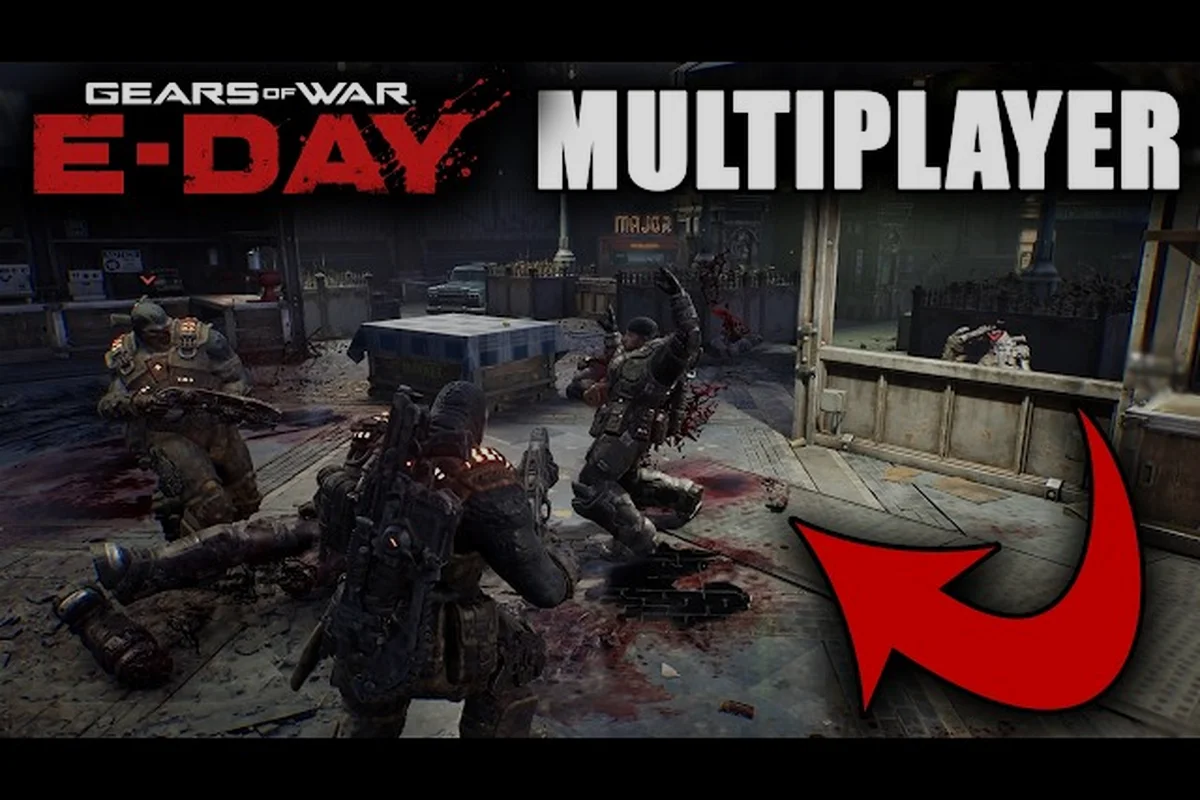
The gears of war e-day ranked mode explained in this guide covers everything from division placement to skill rating decay, so you know exactly what it takes to climb before you queue into your first placement match. The Coalition has rebuilt the competitive ladder around a transparent Skill Rating (SR) system that tracks individual performance alongside win/loss results, which means your rank reflects how you play, not just whether your team scraped out a victory. Since the open beta ran from August 6-10, 2026, community data has already surfaced on how the system behaves, and we have consolidated those findings with official details from the official Gears of War multiplayer page to give you the full picture.
Gears of War E-Day Ranked Divisions and Placement System
The ranked ladder in E-Day splits into six major divisions, each with three tiers that use a roman numeral system similar to other competitive shooters. You start with ten placement matches across your chosen mode, and the game evaluates your performance using a combination of round wins, individual score per minute, and objective contributions like hill time in Conquest or bomb plants in Demolition. According to community reports from the beta, players who performed well in placements could land as high as Diamond III, while average performers typically started in Gold or Platinum depending on their win rate.
| Division | Tier Range | SR Requirement | Decay Rate |
|---|---|---|---|
| Bronze | III to I | 0 - 999 | No decay |
| Silver | III to I | 1,000 - 1,999 | No decay |
| Gold | III to I | 2,000 - 2,999 | No decay |
| Platinum | III to I | 3,000 - 3,999 | 50 SR per week |
| Diamond | III to I | 4,000 - 4,999 | 100 SR per week |
| Master | Single tier | 5,000+ | 150 SR per week |
The placement algorithm weighs your first five matches more heavily than your last five, which means an early losing streak can drag your starting division down even if you finish strong. Each match updates your SR by a variable amount that depends on the skill gap between teams; beating a squad with a higher average rating grants bonus SR, while losing to a lower-rated team costs extra points. The ranked divisions in E-Day also factor in your performance against your direct lane opponent, so a player who consistently wins their one-on-one duels will climb faster than someone who relies on teammates to carry the objective.
How the Placement Matches Work
Your placement series draws opponents from a wider SR band than normal matchmaking, because the system needs to calibrate your skill level before locking in a division. You will face Bronze players in one match and Diamond players in the next, which feels chaotic but provides the algorithm with a broad sample of your abilities. The game shows your provisional SR after each placement match, and you can track your progress toward the final division in the pre-match lobby.
The placement bonus applies to your first ten matches, multiplying SR gains by 1.5x for wins and reducing losses by 25%. This acceleration lets skilled players reach their true rank faster, but it also means a bad streak during placements can bury you in a division that requires significant grinding to escape. Community testing suggests that going 7-3 in placements typically lands you in Platinum, while 9-1 or better pushes toward Diamond, assuming your individual stats stay above the mode average.
Skill Rating Guide for Climbing the Ladder
The gears of war e-day skill rating guide starts with understanding how the SR calculation works beyond simple win/loss tracking. The Coalition implemented a performance score that evaluates your kills, assists, objective time, and survival rate relative to the match average, then adjusts your SR gain or loss by up to 30% based on that comparison. This means a player who goes 15-5 with three bomb plants earns more SR for a win than someone who goes 8-10 with zero objective contributions, even if both players are on the winning team.
| Performance Factor | Weight | Impact on SR |
|---|---|---|
| Kill-to-death ratio | 25% | Up to 15% bonus or penalty |
| Objective score | 35% | Up to 20% bonus or penalty |
| Assist participation | 15% | Up to 10% bonus |
| Survival time | 10% | Up to 5% bonus |
| Round win contribution | 15% | Tied to team result |
SR gain rates vary by division, with Bronze and Silver players earning between 25-35 SR per win and losing 15-20 per loss, while Diamond and Master players gain only 10-15 per win and lose 20-25 per loss. The system intentionally slows progression at higher ranks to prevent inflation, which means climbing from Diamond to Master requires a sustained win streak rather than a lucky run. Players who maintain a 60% win rate in Platinum can expect to reach Diamond in roughly 40-50 matches, based on community tracking from the beta period.
The Decay System and Inactivity Penalties
Ranked decay kicks in after seven days without a ranked match, and it applies only to Platinum and above. The decay rates shown in the table above accumulate daily, so a Diamond player who takes two weeks off loses 200 SR before playing again. You can stop decay by playing one ranked match per week, regardless of the outcome, which means even a loss resets the inactivity timer.
The decay protection system gives you three grace days after your first missed week, during which you can play a match to restore your full SR without penalty. If you let decay run for a full month, the game drops you one full division and resets your weekly decay counter, forcing you to climb back through the ranks. This system keeps the leaderboard competitive and prevents players from parking their rank at the end of each season, according to the Steam store page which lists the game's competitive features.
Ranked Rewards and Season Structure
The gears of war e-day ranked rewards system ties cosmetic items and exclusive content to your final division at the end of each season, which runs for roughly three months. You earn rewards based on your highest achieved division rather than your current rank, so a player who peaks at Diamond but falls to Platinum still receives Diamond-tier rewards. The reward track includes weapon skins, character variants, and banner frames that display your competitive achievements in the pre-match lobby.
| Final Division | Reward Tier | Exclusive Items |
|---|---|---|
| Bronze | Participation | Bronze weapon skin, 1 banner |
| Silver | Tier 2 | Silver Gnasher skin, 2 banners |
| Gold | Tier 3 | Gold Lancer skin, animated banner |
| Platinum | Tier 4 | Platinum character skin, weapon charm |
| Diamond | Tier 5 | Diamond weapon set, exclusive execution |
| Master | Top 500 | Master armor set, unique title |
The season rewards also include a flat amount of in-game currency that scales with your division, giving players a reason to push for higher ranks even if they do not care about cosmetics. Bronze players earn 500 coins, while Master players receive 5,000 coins, which translates to roughly two premium weapon skins at the in-game shop. The best cosmetics guide breaks down which items are worth spending those coins on, and it pairs well with the ranked reward track since both systems feed into your overall loadout.
Seasonal Placement Resets
Each new season soft-resets your SR by compressing everyone toward the middle of the ladder, with the reset formula taking your final division and moving you two divisions down. A Diamond player starts the next season in Platinum, while a Gold player drops to Silver, and Bronze players stay in Bronze. You must play five placement matches at the start of each season to re-establish your rank, and the system uses your previous season performance as a baseline for matchmaking during those games.
The seasonal reset also clears your decay counter, so players who stopped playing mid-season start fresh without accumulated penalties. This reset creates a scramble at the start of each season where high-skilled players grind through lower divisions, which can make early-season matches feel unbalanced. Community reports suggest waiting two weeks after a season starts before queuing ranked, because the matchmaking pool stabilizes once the top players climb back to their proper divisions.
Matchmaking Guide for Ranked and Social Playlists
The gears of war e-day matchmaking guide covers the two distinct playlist categories: ranked and social. Ranked playlists use strict SR-based matchmaking with a maximum skill gap of 500 SR between the highest and lowest player in a match, while social playlists use a looser hidden MMR that prioritizes connection quality over skill parity. The ranked queue also requires a full party of five for team-based modes, whereas social playlists allow solo queuing with random teammates.
| Playlist Type | Matchmaking Basis | Party Size | SR Impact |
|---|---|---|---|
| Ranked TDM | SR within 500 points | Full squad only | Gains and losses |
| Ranked Conquest | SR within 500 points | Full squad only | Gains and losses |
| Ranked Demolition | SR within 500 points | Full squad only | Gains and losses |
| Social Versus | Hidden MMR | Solo to full party | No impact |
| Player vs Bot | None | Solo to full party | No impact |
The ranked matchmaking system prioritizes finding matches within your SR band for up to two minutes, then expands the search window by 250 SR every additional minute until it finds a lobby. This expansion prevents long queue times but can create mismatched games during off-peak hours, which is why the game displays the average SR of both teams in the pre-match screen. The social playlist guide recommends using social modes to warm up before ranked sessions, because the looser matchmaking lets you practice mechanics without risking your SR.
Player vs Bot Mode for Practice
The gears of war e-day player vs bot mode provides a dedicated practice environment where you can learn maps, test weapons, and refine your movement without any competitive pressure. The bot difficulty scales from Recruit to Insane, and the mode tracks your performance separately from your ranked stats, so you can experiment with aggressive playstyles without consequences. Bot matches also count toward daily challenges and weapon mastery progression, making them useful for grinding cosmetic unlocks.
The bot AI in E-Day uses the same navigation and combat behavior as the campaign enemies, which means they react to grenades, take cover, and push objectives with realistic timing. Community feedback from the beta praised the bot difficulty curve, noting that Insane bots provide a solid warm-up for Platinum-level ranked play. The player vs bot mode supports full parties and solo play, and it includes all four Versus modes: Team Deathmatch, Conquest, Demolition, and Crucible.
Ranked Mode Strategies for Each Division
Climbing through the gears of war e-day ranked divisions requires different strategies at each tier, because the skill level and playstyle of opponents shift dramatically as you progress. Bronze and Silver players tend to fight individually without coordinating objectives, while Platinum and above feature coordinated team pushes, active communication, and map control. The ranked strategy for each division focuses on the specific weaknesses that players at that level exhibit, based on community analysis of beta match data.
Bronze to Gold: Fundamentals and Positioning
Players in Bronze through Gold typically lose matches due to poor positioning and wasted lives, so the fastest way to climb is to focus on survival and map awareness. Stick with your team, avoid solo pushes into enemy territory, and prioritize objective play over kill hunting, because the scoring system rewards objective contributions more heavily than raw eliminations. The Gnasher shotgun remains the dominant close-range weapon, but learning to use the Breechshot at medium range gives you an advantage against players who only know one engagement distance.
Platinum to Diamond: Team Coordination
Platinum and Diamond matches require active communication and coordinated ability usage, because individual skill alone cannot overcome a team that rotates properly and trades lives efficiently. Call out enemy positions, coordinate ultimate abilities with your team, and assign roles before the match starts so everyone knows their objective priority. The Conquest mode rewards teams that hold two zones simultaneously, so splitting your squad into a defensive pair and an offensive trio often outperforms a full-team push.
Master Tier: Advanced Tactics
Master tier matches feature the top 500 players on the leaderboard, and the skill gap between Master and Diamond is larger than the gap between Bronze and Platinum. Players at this level track enemy spawns, predict rotations, and execute complex strategies like baiting overextensions and forcing unfavorable trades. The Crucible mode becomes especially important at Master tier because the shrinking zone forces constant engagement, and teams that control the Power Core position early gain a massive advantage.
Frequently Asked Questions
How does the gears of war e-day ranked mode explained system handle disconnects?
Players who disconnect from a ranked match receive a loss and a temporary matchmaking ban that scales with repeat offenses. The first disconnect bans you for 15 minutes, the second for 30 minutes, and the third for 24 hours. Your teammates receive loss protection and lose no SR if you disconnect within the first two minutes of the match.
What is the fastest way to earn gears of war e-day ranked rewards?
The fastest way to earn ranked rewards is to focus on objective-heavy modes like Conquest and Demolition, because the performance score weights objective contributions at 35%. Players who consistently plant bombs, capture zones, and support teammates earn more SR per win, which accelerates division progression. Playing during peak hours also reduces matchmaking expansion that can pair you against higher-skilled opponents.
Can I play ranked mode with a full party of mixed skill levels?
Yes, but the matchmaking system averages your party's SR and searches for opponents within 500 points of that average. This means a Diamond player queuing with Bronze friends faces Platinum-level opponents, which creates a challenging experience for the lower-ranked players. The game also restricts party formation if the SR gap between the highest and lowest player exceeds 2,000 points.
Does the gears of war e-day player vs bot mode help improve ranked performance?
Player vs bot mode sharpens Gnasher mechanics, wall-bouncing, and weapon swaps, but Insane bots follow scripted patterns that won't replicate human unpredictability in TDM or Conquest. Use it to warm up before ranked placements, yet grind social Versus for real coordination. Bot practice builds muscle memory, not the team play higher divisions demand.
How often do ranked seasons reset in Gears of War E-Day?
Ranked seasons run for approximately three months, with the first season starting at launch on October 6, 2026. Each season ends with a two-week off-season where ranked playlists are disabled and social playlists remain active. The off-season gives players time to practice and prepare for the next season's placement matches, which require five games to re-establish your division.