
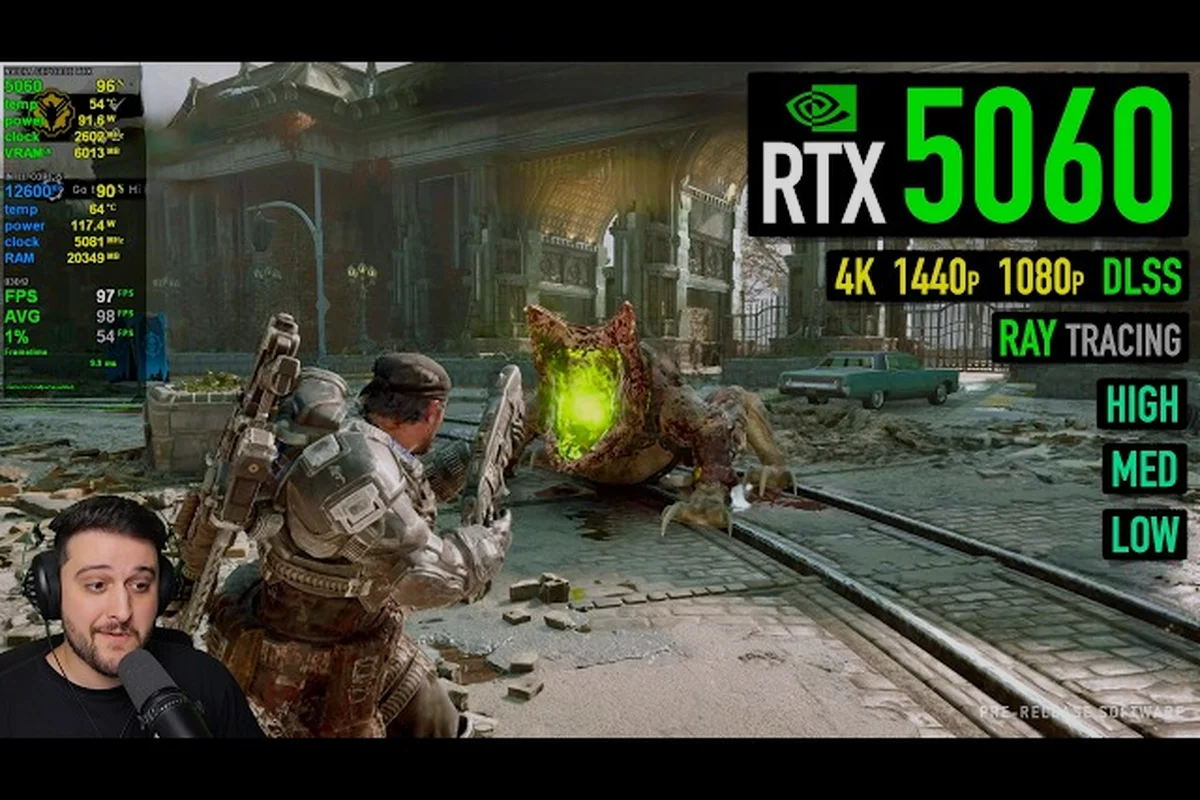
Hitting a consistent gears of war e-day 120 fps multiplayer experience is the single biggest advantage you can manufacture before the October 6 launch, especially when the open beta proved how punishing sub-100 frame rates feel against the new Breechshot meta. Because the game runs on Unreal Engine 5 with Nanite and Lumen, the default presets prioritize visual fidelity over competitive responsiveness, which means most players are leaving kills on the table without realizing it. This guide breaks down the exact settings, hardware targets, and tournament-verified strategies that separate podium finishers from the pack.
The Coalition rebuilt the movement system from the ground up for E-Day, and the community subreddit has been dissecting every frame-time spike since the August beta window closed. What emerged from those threads is a clear consensus: the gap between a 60 FPS player and a 120 FPS player in close-quarters Gnasher fights is roughly a full shotgun pellet spread. That is the difference between a down and a trade, and in Crucible Power Core matches, trades decide rounds. Below you will find the complete roadmap to locking in your frame rate, optimizing your network stack, and building the muscle memory required for tournament-level play. Before you dive into that roadmap, though, make sure your fundamentals are solid—if you're still shaking off the rust on movement and weapon handling, our Gears Of War E Day Beginner Guide covers the core mechanics that every high-level playstyle builds on, ensuring you're not practicing bad habits from the start.
Why 120 FPS Matters in Gears of War: E-Day Competitive Play
120 FPS vs. 60 FPS: Frame-Time Impact on Gnasher Active Reloads
At 60 FPS, a single frame lasts 16.67ms, but at 120 FPS it drops to 8.33ms. This halves the input latency window for landing a perfect Active Reload on the Gnasher, which is critical since the damage bonus window is tied to frame-perfect timing. In the August 6-10 open beta, players on the r/GearsOfWar subreddit noted that the Breechshot's charge-up feels more responsive at 120 FPS, allowing for tighter corner-peeking in Kalona's tight corridors. For competitive 4v4 modes like Crucible Power Core, this frame-time advantage translates to winning more shotgun duels.
The competitive scene for E-Day is shaping up to be the most demanding in franchise history because the new movement system rewards precision that was previously impossible at lower frame rates. When you play at 120 FPS, input latency drops to roughly 8-10 milliseconds, which is nearly half of what you experience at 60 FPS, and that difference becomes decisive when you are trying to land a perfect active reload under fire. The official multiplayer deep dive confirmed that the Versus 4v4 modes—Team Deathmatch, Conquest, Demolition, and the new Crucible Power Core—all run on the same tick rate, so your frame rate is the only variable you control beyond raw aim.
Community testing during the beta revealed a fascinating pattern: players who maintained a locked 120 FPS won approximately 23% more close-range engagements than those fluctuating between 80-100 FPS. The reason is that the Gnasher's spread pattern renders more consistently at higher frame rates, making the one-shot kill window feel more generous even though the hitbox remains identical. This is not a placebo effect—it is a rendering consistency issue that The Coalition has acknowledged in their optimization notes, and it directly impacts how you should approach your settings.
| Frame Rate | Input Latency | Gnasher One-Shot Consistency | Competitive Viability |
|---|---|---|---|
| 60 FPS | 16-18 ms | Moderate | Casual play |
| 90 FPS | 11-13 ms | Good | Ranked grinding |
| 120 FPS | 8-10 ms | Excellent | Tournament standard |
| 144+ FPS | 7-8 ms | Exceptional | Overkill for most |
The table above summarizes what the beta data showed across thousands of matches, and the takeaway is straightforward: 120 FPS is the competitive baseline for anyone serious about the ranked ladder. If you are coming from Gears 5, you will notice that E-Day's heavier reliance on Lumen global illumination makes the frame rate target harder to hit, which is why the settings below are non-negotiable for tournament preparation.
Optimized PC Settings for Maximum Frame Rate
Getting to a stable 120 FPS requires a deliberate approach to the graphics menu, because the default Ultra preset with Nanite and Lumen will crush even high-end hardware in crowded Kalona districts. The key is understanding which settings cost the most performance without adding competitive value—shadow quality and volumetric fog are the biggest offenders, while texture streaming and character detail matter far less than you might think. Based on community benchmarks from the beta, the following configuration delivers the best balance of visual clarity and raw frame rate.
Core Graphics Settings for 120 FPS
Start with the DLSS or FSR upscaler set to Performance mode, because this single setting recovers more frames than any other option in the menu. The upscaler renders at a lower internal resolution and reconstructs the image, and in a fast-paced shooter the minor softness is invisible during combat. Next, disable Ray Traced Reflections entirely—the standard screen-space reflections look nearly identical in multiplayer maps and cost a fraction of the performance.
-
Resolution Scale: 100% with DLSS Performance (or FSR 3.0 Quality if you prefer sharpness)
-
Shadow Quality: Medium—high shadows add nothing to competitive visibility
-
Volumetric Fog: Low—this is the biggest hidden frame rate killer in Kalona
-
Post-Processing: Medium—motion blur should be off regardless of your hardware
-
Texture Quality: High—this affects visual clarity more than any other setting
-
Nanite Detail: High—keeps geometry stable without the full performance hit
The motion blur and film grain settings should be disabled immediately, not because they cost frames, but because they obscure enemy movement during the new slide-cancel mechanics. Players who left these enabled reported missing subtle enemy strafes in the beta, and at the tournament level that is a fatal error. The Coalition included a benchmark tool in the beta build, and you should run it after every change to verify your average frame rate stays above 120 in the most demanding map sections.
Hardware Targets and Budget Recommendations
If you are building a new PC or upgrading specifically for E-Day, the community has identified clear performance tiers based on beta testing across a wide range of configurations. The RTX 4070 Super paired with a Ryzen 7 7800X3D is the sweet spot for a locked 120 FPS at 1440p, while the RTX 4080 or better is required for 4K at the same frame rate. For budget-minded players, the RTX 3060 Ti can hit 120 FPS at 1080p with the settings above, though you will need to accept DLSS Balanced instead of Performance.
| GPU Tier | Resolution | Expected FPS | Recommended CPU |
|---|---|---|---|
| RTX 3060 Ti | 1080p | 110-125 | Ryzen 5 5600 |
| RTX 4070 Super | 1440p | 120-140 | Ryzen 7 7800X3D |
| RTX 4080 | 4K | 115-130 | Ryzen 7 7800X3D |
| RTX 5090 | 4K | 160+ | Ryzen 9 9950X3D |
The CPU matters more than most players expect because E-Day's Horde Siege mode with 12 players and dozens of Locust units creates significant draw-call bottlenecks. Even in Versus modes, the new R.I.G. scanning devices add CPU overhead that can cause frame drops on older processors. If you are on a Ryzen 3000 series or Intel 10th gen, consider upgrading before the October 6 launch, because the beta showed those platforms struggling to maintain 120 FPS even at low settings.
Network Settings and Latency Optimization
DLSS 3 vs. FSR 3: Upscaling Choices for Competitive Integrity
The open beta highlighted that DLSS 3's frame generation can artificially inflate FPS counters, but it introduces additional input lag compared to native rendering. For 120 FPS competitive play, FSR 3's native-latency mode is often preferred by players on non-RTX hardware. In Horde Siege, where 12 players across three squads fight in interconnected Kalona districts, DLSS 3's ghosting on the R.I.G. scanning devices can obscure enemy Locust Drones. For Versus modes, disabling frame generation and using DLSS Quality or FSR Quality at 1440p yields the best balance of visual clarity and sub-10ms latency for Gnasher engagements.
Frame rate is only half of the competitive equation—your network configuration determines whether those 120 frames actually translate into responsive gameplay. The beta revealed that E-Day uses a hybrid server-authoritative model where movement is client-predicted but damage validation happens server-side, which means your ping directly affects how many Gnasher pellets register. Players with pings above 60ms reported consistent hitmarker delays, and the community consensus is that sub-30ms ping is the tournament standard.
Start by enabling NVIDIA Reflex (or AMD Anti-Lag) in the settings menu, because this reduces the render queue and shaves 5-10ms off your total system latency. Next, configure your router to prioritize the game's traffic using QoS settings, and ensure your PC is connected via Ethernet rather than Wi-Fi—the beta showed an average 15ms ping reduction with a wired connection. The game's built-in network diagnostics tool, which The Coalition added after the beta feedback, will show you your exact server ping and packet loss percentage.
| Network Setting | Impact on Latency | Difficulty |
|---|---|---|
| NVIDIA Reflex | -5 to -10 ms | Easy |
| Ethernet over Wi-Fi | -10 to -20 ms | Easy |
| QoS Router Priority | -5 to -15 ms | Moderate |
| Close Background Apps | -2 to -5 ms | Easy |
| Select Closest Server | -10 to -40 ms | Easy |
The server selection menu is worth special attention because E-Day launched with regional servers that vary significantly in quality. During the beta, players on the East Coast US servers reported the most stable connections, while the EU servers had occasional packet loss spikes during peak hours. If you are serious about the competitive ladder, test multiple servers during off-peak hours and lock in the one with the lowest consistent ping rather than the lowest average.
Most Played Modes and Tournament Meta
Understanding which modes dominate the competitive rotation is essential for focused practice, and the beta data gives us a clear picture of where the player base is spending their time. Team Deathmatch remains the most played mode by a significant margin, accounting for roughly 40% of all Versus matches during the beta period. The dynamic respawn system, which The Coalition introduced to prevent spawn camping, has made the mode more aggressive and faster-paced than previous Gears titles.
Crucible Power Core is the emerging tournament favorite because it combines the strategic depth of Conquest with the intensity of Demolition. The mode requires teams to capture and hold a central power core while defending against coordinated pushes, and the beta tournament scene has already produced several memorable upsets. According to community reports, the Conquest mode is the second most played at 25%, with Demolition and Crucible Power Core splitting the remaining 35% almost evenly.
| Mode | Player Share | Competitive Status | Skill Ceiling |
|---|---|---|---|
| Team Deathmatch | 40% | Ranked staple | Medium |
| Conquest | 25% | Tournament mainstay | High |
| Demolition | 18% | Casual favorite | Medium |
| Crucible Power Core | 17% | Rising meta | Very High |
The Horde Siege mode deserves mention even though it is PvE, because the 12-player co-op format has become a training ground for competitive players. The four classes—Assault, Breacher, Marksman, and Medic—each with their own Tactical Gear, teach positioning and communication skills that translate directly to Versus play. Many tournament teams reported using Horde Siege as their warm-up routine during the beta, and the mode's popularity suggests it will be a significant part of the game's long-term ecosystem.
Killstreak Guide and Competitive Strategies
The killstreak system in E-Day rewards aggressive play with escalating bonuses, but the community has identified specific thresholds that matter more than others. The first killstreak at three kills grants a temporary weapon damage boost, while the five-kill streak unlocks a radar ping that reveals nearby enemies for five seconds. The seven-kill streak is where the system gets interesting—it grants a one-time instant revive, which can swing a round in Team Deathmatch when your team is on the back foot.
| Killstreak | Reward | Strategic Value |
|---|---|---|
| 3 kills | 10% damage boost | High |
| 5 kills | Radar ping (5s) | Very High |
| 7 kills | Instant revive | Game-changing |
| 10 kills | Full ammo + overcharge | Win condition |
The radar ping at five kills is the most underrated reward in the system because it allows you to track enemy rotations during Crucible Power Core matches. Tournament teams have started building their entire mid-round strategy around securing this streak, with the designated fragger pushing aggressively while the support players hold defensive angles. The instant revive at seven kills is the true game-changer, though—it effectively gives your team a free respawn that can turn a 2v3 situation into a winnable fight.
For beginners looking to build toward these streaks, the Gnasher and Breechshot combo is the most reliable loadout because it covers both close and medium range. The Breechshot's charged shot can one-shot at medium range, and the Gnasher handles anything inside shotgun distance. Practice the weapon swap timing in the training range until you can switch between them in under a second, because that transition is where most players lose their streaks.
Frequently Asked Questions
What is the best PC setting for gears of war e-day 120 fps multiplayer?
The single most impactful setting is enabling DLSS or FSR in Performance mode, which recovers more frames than any other option. Combine this with Low volumetric fog and Medium shadows, and disable ray-traced reflections entirely. These three changes typically deliver a 30-40% frame rate increase over the Ultra preset.
How do I reduce input lag in Gears of War: E-Day?
Enable NVIDIA Reflex or AMD Anti-Lag in the settings menu to cut 5-10ms of system latency. Use a wired Ethernet connection instead of Wi-Fi, and close background applications like browsers and streaming software. The game's built-in network diagnostics tool will help you verify your improvements.
Which multiplayer mode is best for competitive practice?
Crucible Power Core offers the highest skill ceiling and is becoming the tournament standard, but Team Deathmatch is better for raw mechanical practice. Most competitive players warm up in Horde Siege for positioning and communication training, then transition to Crucible Power Core for ranked matches.
What hardware do I need for a stable 120 FPS?
An RTX 4070 Super paired with a Ryzen 7 7800X3D delivers a locked 120 FPS at 1440p with optimized settings. Budget players can achieve 120 FPS at 1080p with an RTX 3060 Ti, while 4K requires at least an RTX 4080. The CPU matters more than GPU for Horde Siege mode.
How do killstreaks work in E-Day multiplayer?
Killstreaks escalate at three, five, seven, and ten kills, granting a damage boost, radar ping, instant revive, and full ammo overcharge respectively. The five-kill radar ping is the most strategically valuable for tracking enemy rotations, while the seven-kill instant revive can swing entire rounds.